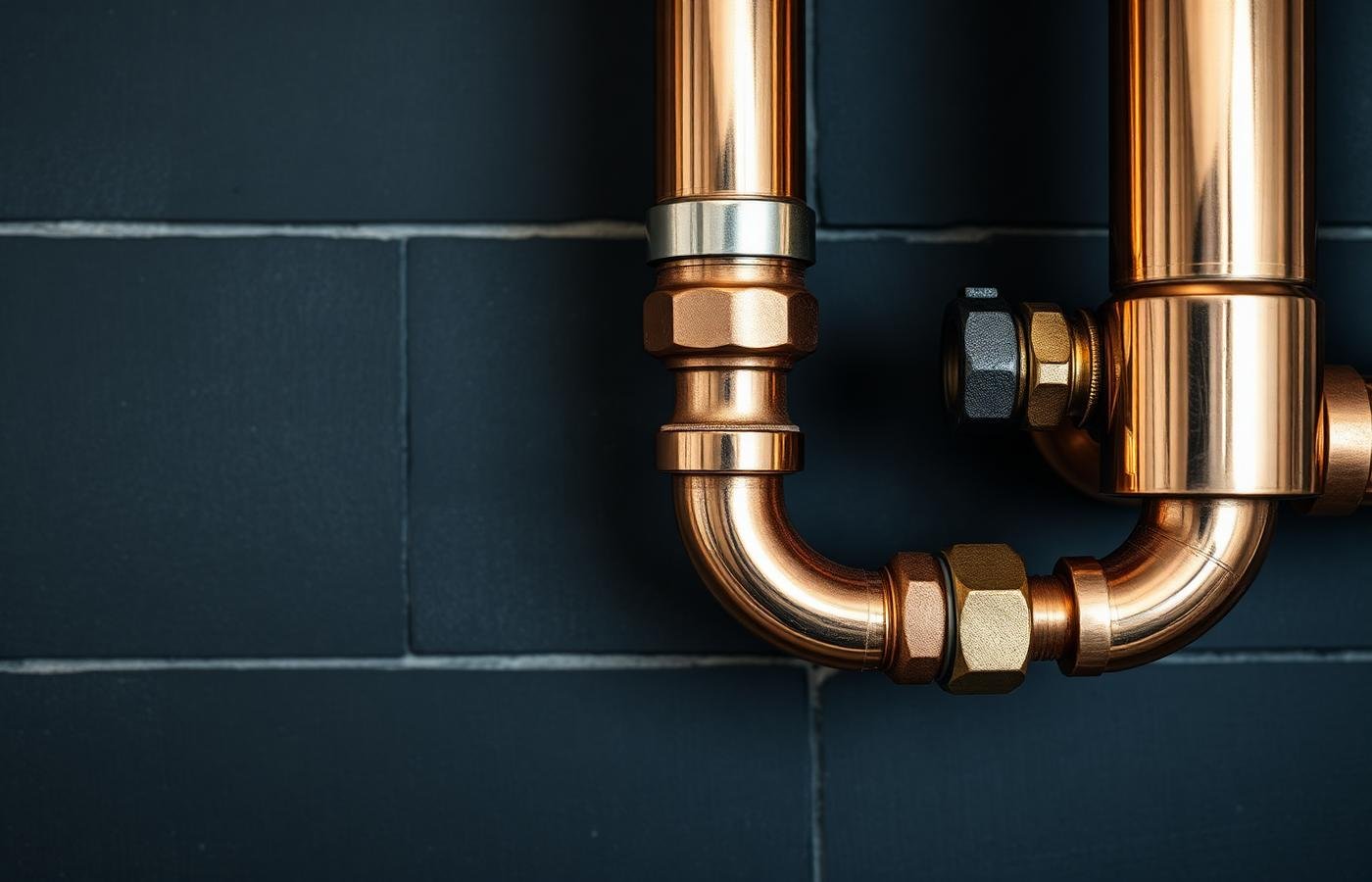
Most of our emergency work in Richmond and the rest of Metro Vancouver comes down to three things: older copper with pinholes, failed fittings or supply lines under sinks and toilets, and pipes that froze or were damaged during a renovation. We find the source, stop the water, and repair it properly so it doesn't come back next month.
Call right away if you notice
- Water dripping from a ceiling, light fixture or pot light
- A wet or bulging patch of drywall, or flooring that is lifting
- The water meter spinning when every tap is off
- A hissing sound in the walls or a sudden drop in water pressure
- Water pooling around the water heater, toilet base or under a sink
- A musty smell or mould spots that keep coming back
What to do before we arrive
Shut off the main water valve. In most Richmond houses it is where the water line enters the home — often in the garage, a utility room or a crawl space. In townhomes and condos, there is usually a shut-off in a closet or behind an access panel near the water heater. If you can't find it, call us and we'll talk you through it on the phone.
If water is near electrical outlets or fixtures, turn off that circuit at the panel. Move what you can out of the way, take a few photos for insurance, and text them to us — a photo often tells us which parts to bring so the repair is done in one visit.
Finding the leak without tearing the house apart
We use pressure testing, moisture meters, thermal imaging and acoustic listening to narrow a hidden leak down to a small area before we open anything. That usually means one small access hole rather than a wall full of guesses. Once it's found, we repair the pipe in copper or PEX, pressure-test the line, and leave the opening ready for drywall repair.
If the pipe is failing in several places — common with older copper and galvanised lines in homes built before the 1980s — we'll tell you honestly whether a spot repair makes sense or whether a section repipe will save you money over the next few years.
Insurance and documentation
For water-damage claims we provide photos, a written description of the cause and the repair, and an itemised invoice. Many insurers want to know the cause of loss, and a clear plumber's report makes that conversation much easier.
How it works
- 01
Call or text
Tell us what's leaking and where. We'll walk you through shutting the water off if needed.
- 02
Find the source
We locate the leak with testing tools first, so any opening is small and targeted.
- 03
Flat quote
You get one price to approve before the repair starts — no hourly surprises.
- 04
Repair & test
Pipe repaired, line pressure-tested, water back on and the area cleaned up.
What it typically costs
| Pinhole or small pipe repair (accessible) | $250 – $550 |
| Electronic leak detection | $300 – $650 |
| Main shut-off valve replacement | $400 – $900 |
| Burst pipe repair inside a wall or ceiling | $450 – $1,200 |
Typical ranges including labour and standard parts. Every job gets one flat price, approved by you before work starts.
Common questions
Do you handle late-night and weekend emergencies?
We answer calls and texts 24 hours a day. Whenever you call with an active leak, we'll talk you through shutting the water off and book the first available slot.
Will you have to cut open my walls?
Sometimes a small opening is needed, but we locate the leak first with moisture meters, thermal imaging and pressure testing, so the access hole is as small as possible.
Is a pinhole leak a sign I need a full repipe?
Not always. One pinhole can be a one-off. If you've had two or three in a couple of years, the pipe is likely thinning throughout and we'll show you the options and costs for both.
Can you help with my insurance claim?
Yes. We provide photos, a written cause-of-loss description and an itemised invoice that you can send straight to your insurer.